The problem
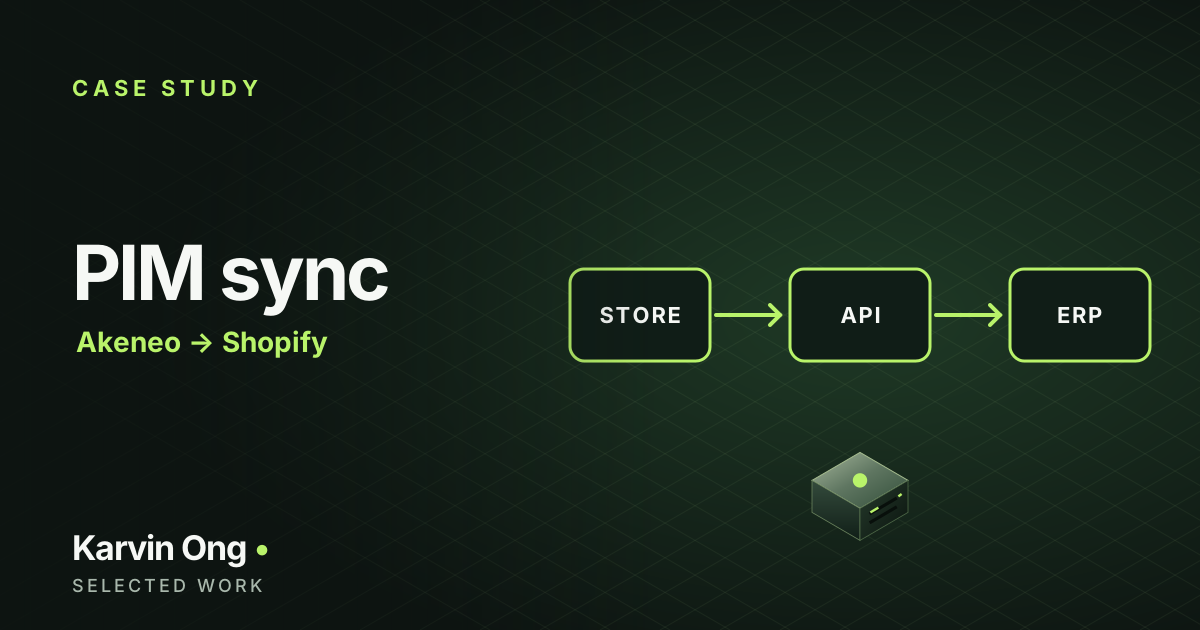
Product information lived in Akeneo, the retailer’s PIM, while the storefront ran on Shopify. Every product, attribute and image had to flow from one to the other reliably. When that sync breaks, the website quietly shows out-of-date or missing product information.
What I did
- Led the Akeneo-to-Shopify integration, built on the Webkul connector, streamlining how products are managed and synchronised.
- Upgraded the integration to keep it compatible with both platforms as they changed.
- Maintained the store’s custom Shopify app, keeping it working alongside the integration and platform changes.
How I approach PIM integrations
- One source of truth. Product content is edited in the PIM only. The storefront receives it, never the other way round, so there is never a question of which copy is right.
- Map deliberately. PIM attributes, families and categories rarely match the storefront’s model one to one, so the mapping is designed and documented rather than left to defaults.
- Prefer a maintained connector, and keep it current. Using a supported connector and upgrading it on schedule is cheaper than maintaining a fragile custom sync.
The lesson
Integrations are never finished. Treating the connector as part of the platform, with upgrades and ownership, keeps product data flowing long after the initial build.